
How to Search Civil Dockets
A St. Francis County civil docket search begins at Search ARCourts. Use participant search when you know a party name. Use case search when the number appears on a summons, notice, or filed page. Broad results narrow quickly by St. Francis County, court level, civil case type, status, and date where those filters exist. Before you rely on a match, confirm the case style, filing date, judge, and court.
Free online access is not the only route. Circuit civil files can also be checked with the St. Francis County Circuit Clerk in person at 313 South Izard Street, by phone at 870-261-1715, or by mail at P.O. Box 1775, Forrest City, AR 72336-1775. Ask about fax procedure at 870-261-1723. District civil and small-claims files go to the assigned department: Forrest City and Palestine use 870-261-1410, while Madison uses 870-633-2172. At the counter, ask the clerk about inspecting older paper files, docket books, archive volumes, or microfilm indexes too.
- Select participant or case-number search.
- Enter exact terms, then narrow to St. Francis County and the correct court.
- Match the style, number, filing date, and case type.
- Trace service, motions, orders, settings, and the final result.
- Ask the custodian for a public filing or certified judgment when needed.
St. Francis Civil Court Split
Case type decides which counter holds the record. St. Francis County Circuit Court has general civil jurisdiction. It also has divisions for domestic relations, probate, and juvenile matters. District Court takes limited civil and small-claims cases under current Arkansas law. When a district case is appealed, a new circuit case is created rather than extending the same district web page.
| Civil matter | Starting court | Custodian |
|---|---|---|
| General civil suit | Circuit Court | St. Francis County Circuit Clerk |
| Domestic relations | Circuit Court division | St. Francis County Circuit Clerk |
| Probate case | Circuit Court division | St. Francis County Circuit Clerk |
| Small claim or district civil matter | District Court | Assigned District Court department |
The title "County and Probate Clerk" trips people up. Probate actually begins with the Circuit Clerk, because probate is a Circuit Court division. The separate county/probate office handles county, quorum, and related official functions described by the county.
When you request a file, give the St. Francis County civil case number, caption, filing year, and the document you need. Want a judgment? Name the judgment date if you know it. Want a docket? Ask for the chronological case-event record. That distinction lets the Circuit Clerk separate a case index from the pleading or order behind one entry. District small-claims requests need the same facts, but they go to the department that filed the case. If the online result shows a transfer or district appeal, keep both numbers so staff can follow the record from the first court to the receiving court.
What a Civil Docket Shows
A St. Francis County civil docket names the case and then records its procedural trail. Participant roles matter. A plaintiff starts an ordinary civil action. A petitioner asks for relief in a petition-based case. An event reading "motion filed" proves only that the clerk accepted a motion. The related order shows what the judge did about it.
| Case Header | Number, style, court, division, type, filing date, status, and assigned judge. |
|---|---|
| Participants | Plaintiff or petitioner, defendant or respondent, added parties, and attorneys. |
| Process | Summons issuance, service return, answer, and responsive pleadings. |
| Events | Complaint, motion, response, notice, order, hearing, trial, judgment, and appeal. |
| Outcome | Dismissal, nonsuit, default, agreed order, judgment, transfer, or appeal. |
| Later Activity | Writ, garnishment, satisfaction, revival, and appeal-record events where applicable. |
Public PDF links vary with document security and court practice. A missing image does not prove the filing is sealed. It can equally mean the court has not placed an image online.
St. Francis Service Entries
Service means formal delivery of court process or notice. On a St. Francis County civil docket, "summons issued" is not proof of service. It does not show the other side was served. Look for a return, affidavit, waiver, or later event recording what actually happened. A response or appearance can add context. Still, do not stretch a docket label past its own words.
- Summons issued
- The clerk issued process for service; completion has not yet been shown.
- Return of service
- A filing reports the result of a service attempt.
- Default judgment
- A civil result entered after a party failed to defend as required.
- Nonsuit
- A plaintiff's voluntary end to a claim, subject to the rule and order.
Pair each request with its ruling. An answer follows the complaint, and an order may follow a motion. The date trail then shows whether the St. Francis County civil case moved forward, paused, transferred, or closed.
Types of Civil Cases on the Docket
St. Francis County civil dockets hold more than one kind of dispute. The case category helps you spot the right court and any access limits. General civil litigation differs from a district small claim. Domestic relations and probate sit in Circuit Court divisions. Yet protected content within those matters may not be available remotely.
- General civil claims involving contracts, torts, or property.
- District civil and small-claims matters within current limited jurisdiction.
- Domestic-relations petitions and related orders where public.
- Probate proceedings kept as Circuit Court case files.
- Post-judgment process, including writs, garnishments, or satisfaction filings.
Jurisdiction limits can change. Confirm the current filing category with the clerk before filing a new matter. For a case that already exists, the court and case-type fields on the St. Francis County civil docket are the best routing clues.
St. Francis Civil eFlex Trail
Arkansas eFlex accepts electronic filings under the state's electronic-filing framework. It is not the public St. Francis County civil docket search. The eFlex interface serves registered filing users. Search ARCourts, by contrast, exposes public case information and authorized images. A document can move through eFlex review. It may later appear as a dated case event without every page becoming public online.
The official eFlex page shows the filing side of that split. View the Arkansas eFlex source for this image.
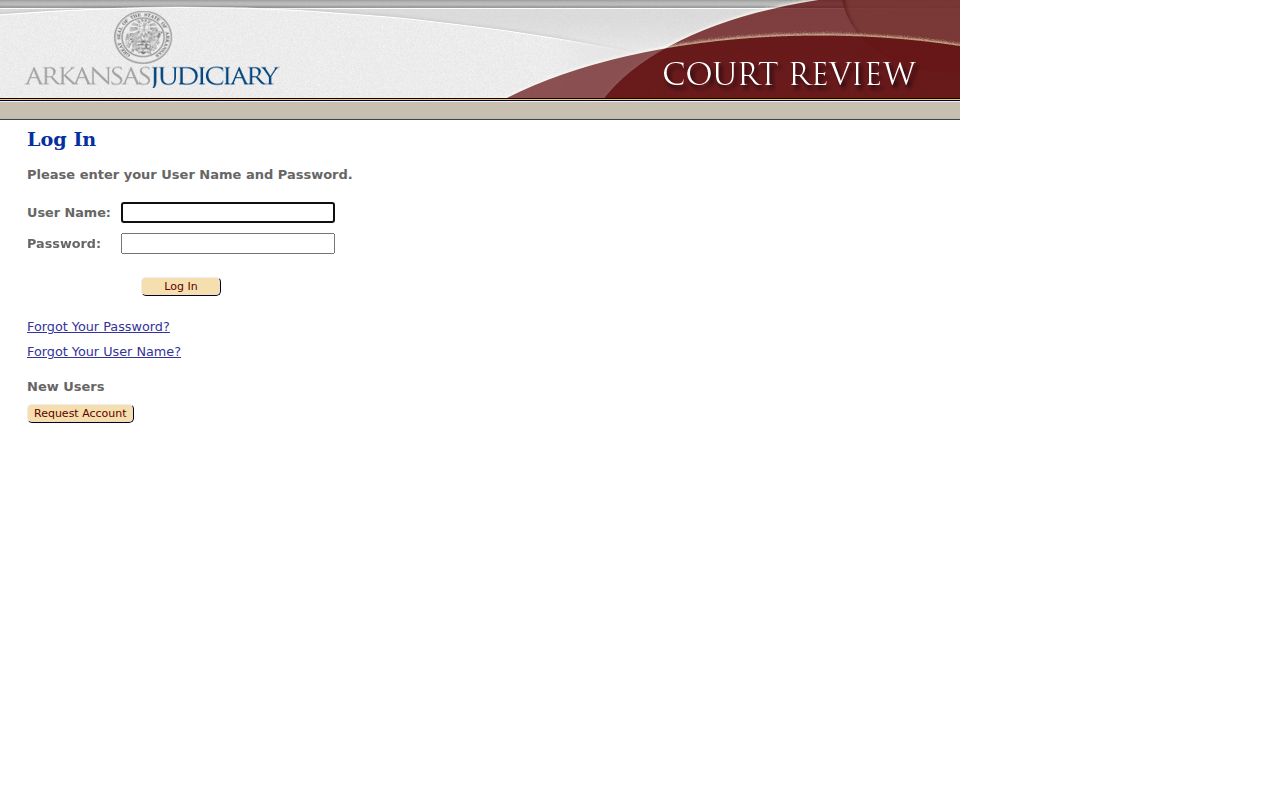
The login-focused screen is exactly why a public searcher should use Search ARCourts instead of a clerk-facing filing workflow. Administrative Order 21 governs electronic filing. The public meaning of an event still comes from the docket, the filed document, and the court's order.
Settings and Hearings on Civil Dockets
Look at what kind of event a setting names before you plan around it. A St. Francis County civil docket entry might cover a motion hearing, a pretrial conference, docket call, a bench trial, a jury trial, or some other case-specific event. Search ARCourts lists these once court staff enter them. Later entries matter just as much. A continuance, a reset, an amended notice, a cancellation, or a disposition can each change the picture, and the old date stays in the case history even after a new one is set.
The judge controls the calendar. Staff handle recording and communication. For a date that matters to you, confirm with the assigned court, since seeing it on a portal does not authorize you to appear remotely, and no standing Zoom link exists for St. Francis County. Madison and Palestine department cases may be heard in Forrest City, so check both the venue name and the physical place. A fuller date workflow sits on the St. Francis County court calendar.
St. Francis Civil Search Modernization
Arkansas started replacing Public CourtConnect in 2024. The successor, Search ARCourts, is a mobile-friendly release tied to a wider case-management modernization push. By 2026, court personnel were testing beta functions for search, filing, scheduling, outcomes, and payments. Fields shift as the system grows. Run durable searches from the current official portal, and expect no fixed screen layout. The Arkansas Judiciary online services directory sits at the center of that. It lists public case search next to eFiling and other court services.
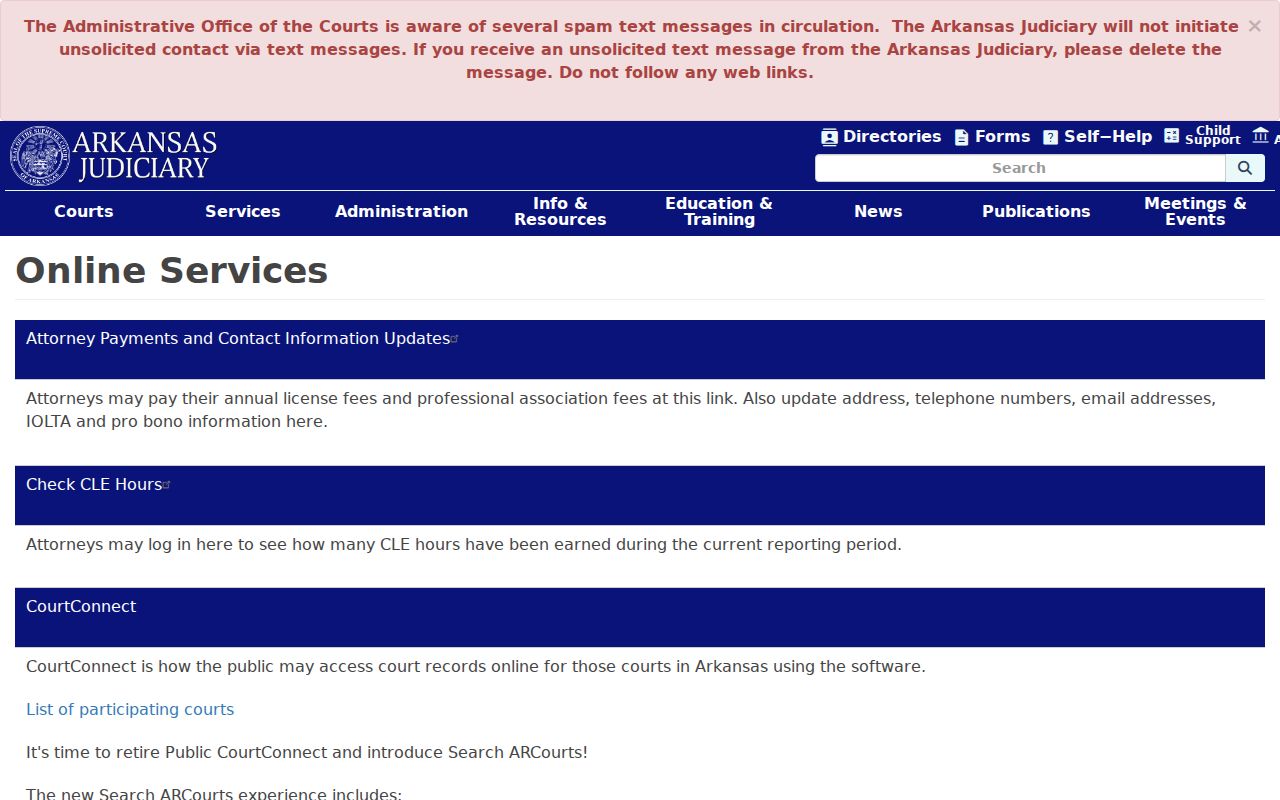
That directory keeps a useful line between looking up a St. Francis County civil case and submitting a filing. The AOC Build Initiative documents the technology change as it unfolds.
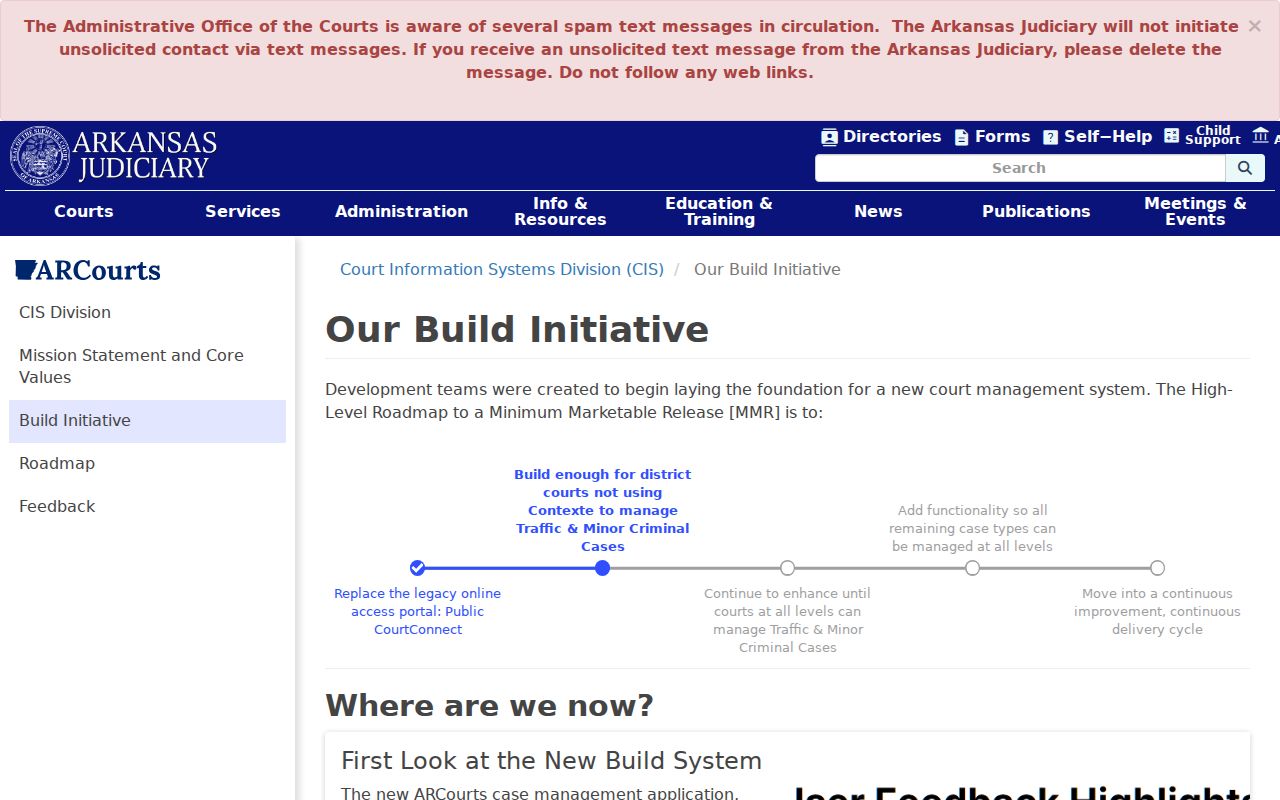
The roadmap also explains something practical. When a legacy function or an older record is not visible online, the clerk remains the reliable fallback for a St. Francis County civil docket search.
St. Francis Civil Dispositions
A "closed" label on a St. Francis County civil docket tells you almost nothing by itself. Who prevailed stays hidden. The reason the case ended does too. You have to read the judgment, the dismissal, or the agreed order. The status line alone will not tell you that. A default judgment can still face a later motion to set aside. A voluntary dismissal or nonsuit carries consequences that a short event label never shows. And settlement terms can stay outside the public docket even when an agreed dismissal is recorded.
Transfers and consolidations add another step. A transfer entry points you to the receiving court or a new number. Consolidated cases may keep several numbers while one becomes the lead. An appeal builds an appellate record for briefs and the mandate. The trial docket can still receive notices. When you need formal proof, order the actual judgment from the Circuit Clerk. Do not rely on a portal alone.
Public Access to Civil Dockets
Administrative Order 19 sets the base rule for Arkansas court-record access. It draws the line between access at the courthouse and remote access. Administrative Order 19.1 adds a companion rule requiring protected confidential information to be redacted from the public version.
Access boundary: Juvenile files, sealed records, protected family material, account numbers, and other confidential data are not exposed through an ordinary St. Francis County civil docket search.
The Arkansas Freedom of Information Act opens many public-agency records. It does not override a court sealing order. Nor does it override the judiciary's own access rules. For one civil filing, ask the clerk directly. AOC's compiled-data process serves bulk needs, not a single judgment. If remote access fails, fall back on the counter, a phone call, mail, or a fax inquiry. The older-record search route described above also works.