
How to Get Court Records
Start with the free Search ARCourts portal. It is the quickest way into St. Francis County court records. It can surface a case number, the court, the parties, case status, events, settings, and links to public documents. Keep one thing in mind. A remote result is case information, not a clerk-certified file. For Circuit Court matters, contact the St. Francis County Circuit Clerk. That covers criminal, civil, domestic relations, probate, juvenile, or district appeals. Traffic, violation, misdemeanor, small-claims, and district civil files are different. Those go through whichever department is named on the citation or notice.
When the online record comes up empty, the older channels still work. You can inspect and request copies at the proper counter in person. Circuit requests can also be mailed to P.O. Box 1775, Forrest City, AR 72336-1775. For Circuit Court, call 870-261-1715. Forrest City and Palestine District Court matters use 870-261-1410. Madison has its own published line at 870-633-2172. Fax numbers are handy for confirming procedure. The court does not treat a fax alone as a valid copy order.
- Identify the court level, case number, full caption, and filing year.
- Search the public case information and note the exact event or document date.
- Choose the proper Circuit or District Court clerk, then request inspection, a plain copy, or certification.
- For mail, state the document title, return address, telephone number, and requested copy type.
- Confirm the total cost, payee, accepted payment, processing time, and mailing needs before sending money.
Three St. Francis Court Record Layers
A docket, a filed document, and a certified copy are three different things. The docket is the chronological index of a case. It shows that a motion, order, hearing, or judgment was entered, nothing more. The filed PDF holds the actual text. That applies when remote access is authorized. A certified copy is different still. The clerk authenticates it as a true reproduction. Printing a Search ARCourts screen gives you none of that certification.
| Layer | What It Provides | Best Source |
|---|---|---|
| Docket or case information | Case header, events, settings, status, and available links | Search ARCourts or clerk inspection |
| Filed document | The wording of a pleading, motion, order, or judgment | Public image or correct clerk |
| Certified copy | A clerk-authenticated reproduction for formal proof | Custodian clerk only |
The Arkansas court forms catalog shows blank forms used to start or respond to a case. A filed document in a St. Francis County case is the completed, stamped version of that form.
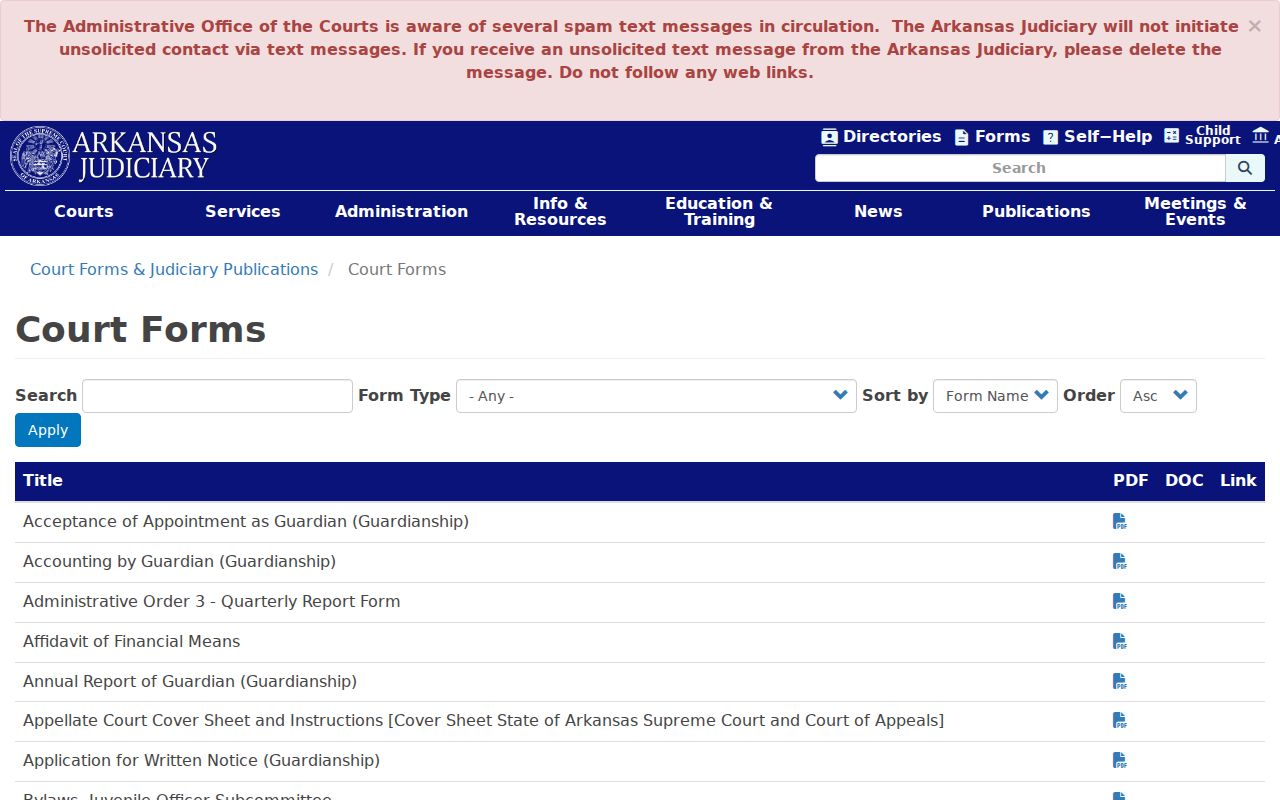
The statewide library hands you the template. The filed and stamped copy comes only from the case file.
St. Francis Court Records and Transcripts
A court transcript does not come from the clerk's file. The docket may show a hearing took place. It cannot reproduce what was said in the courtroom. The official court reporter assigned to the proceeding prepares the transcript. Contact that reporter with the St. Francis County case number. Also give the date of the proceeding, the judge, and the exact portion you need. Ask for an estimate and the delivery terms too.
The Circuit Clerk can help you find the case event. The office may point you toward the assigned reporter. A copy request at the docket counter will not produce a transcript.
Types of Court Records
St. Francis County court records cover both trial-court levels. Circuit Court files can hold felony pleadings, civil complaints, domestic-relations petitions, probate papers, juvenile material subject to access limits, judgments, and notices of appeal. District Court is a different docket entirely. Its records cover traffic citations, violations, misdemeanors, small claims, and limited civil matters. Court records may include:
- docket sheets and case-event histories;
- complaints, petitions, answers, motions, and responses;
- orders, judgments, sentences, and recorded dispositions;
- hearing notices, settings, continuances, and appeal papers; and
- public exhibits or attachments retained with the case.
A transcript is a separate animal. The official court reporter assigned to the judge or proceeding produces it. Give the reporter the case number, hearing date, judge, and the portion you want. Then ask about cost and delivery. Exhibits take extra care. Ask the clerk whether the exhibit was retained. Ask whether it was admitted. Ask whether an access order is required. Physical evidence or returned material cannot be copied like a routine filing.
St. Francis Court Records Clerk Channels
Forrest City has two record counters, and they are not interchangeable. The St. Francis County Circuit Clerk works from the county courthouse. Its address is 313 South Izard Street. The St. Francis County District Court, Forrest City Department, sits at 615 East Cross Street. Follow the case level, not the closest building.
St. Francis County Circuit Clerk
313 South Izard Street
Forrest City, AR 72335
Mail: P.O. Box 1775, Forrest City, AR 72336-1775
870-261-1715
St. Francis County District Court
615 East Cross Street
Forrest City, AR 72335
870-261-1410
Telephone staff can steer a public request and explain current procedure. But oral information is not a certified court record. Published courthouse hours run Monday through Friday, 8:00 a.m. to 4:30 p.m. Call ahead to confirm counter availability and any cutoff before you travel.
St. Francis Court Records Public Inspection
Under Administrative Order 19, public inspection and remote access are not always the same. A clerk may hand you an unrestricted record at the counter. Yet no image link may appear online. Ask whether inspection is available before ordering copies. Ask too whether a public terminal can display material that remote access hides.
The county does not publish a terminal count, room number, device policy, or photography rule for the courthouse. Call first. Recording a courtroom takes separate judicial permission. No counter practice can be read as granting it.
What a Court Record Contains
A full St. Francis County court record runs deeper than the online event list. The header names the filing court and case. Participant blocks assign each person a role. The events index what parties filed and what the judge entered. Settings track the calendar, while outcome and financial fields may show the result and any assessments. Only images assigned a public access level appear online.
| Case Number | The unique identifier assigned by Circuit or District Court. |
|---|---|
| Pleadings | Complaints, petitions, answers, motions, responses, and related filings. |
| Orders & Judgments | Signed rulings, final judgments, sentences, and disposition documents. |
| Docket Sheet | The dated index of filings, settings, actions, and outcomes. |
| Exhibits | Attachments or admitted items, subject to retention and access rules. |
Read event labels with care. “Motion filed” only records a request, not a ruling, and a “closed” status tells you nothing about who won. Pull the actual order, or ask the clerk for it by name and event date, before drawing any conclusion about what the St. Francis County court docket entry means.
Missing St. Francis Court Record Images
Search ARCourts sometimes lists a filing with no PDF attached. That gap does not mean the document is sealed. The image may simply not be digitized yet. It may lack a public security level. Or it may sit only in the clerk's paper file at the courthouse. Note the court, the event date, and the description, then ask the St. Francis County clerk directly whether the filing is open to inspection or copying. The AOC court-information request page covers bulk or compiled data and spells out the Administrative Order 19 requirements that govern those requests.
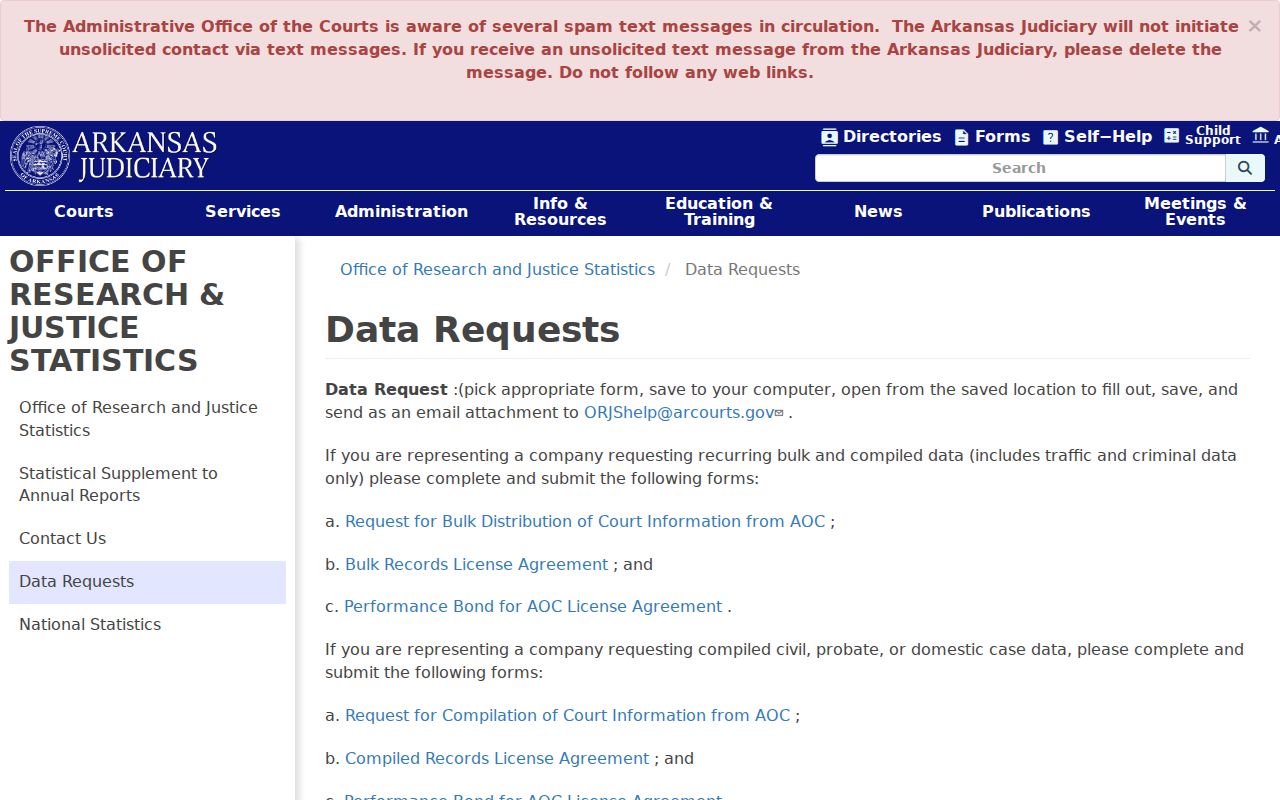
That AOC route won't get you one St. Francis County judgment, order, or docket sheet. Single documents come from the local clerk. For a technical problem with a court system, the separate AOC contact form lists support options.
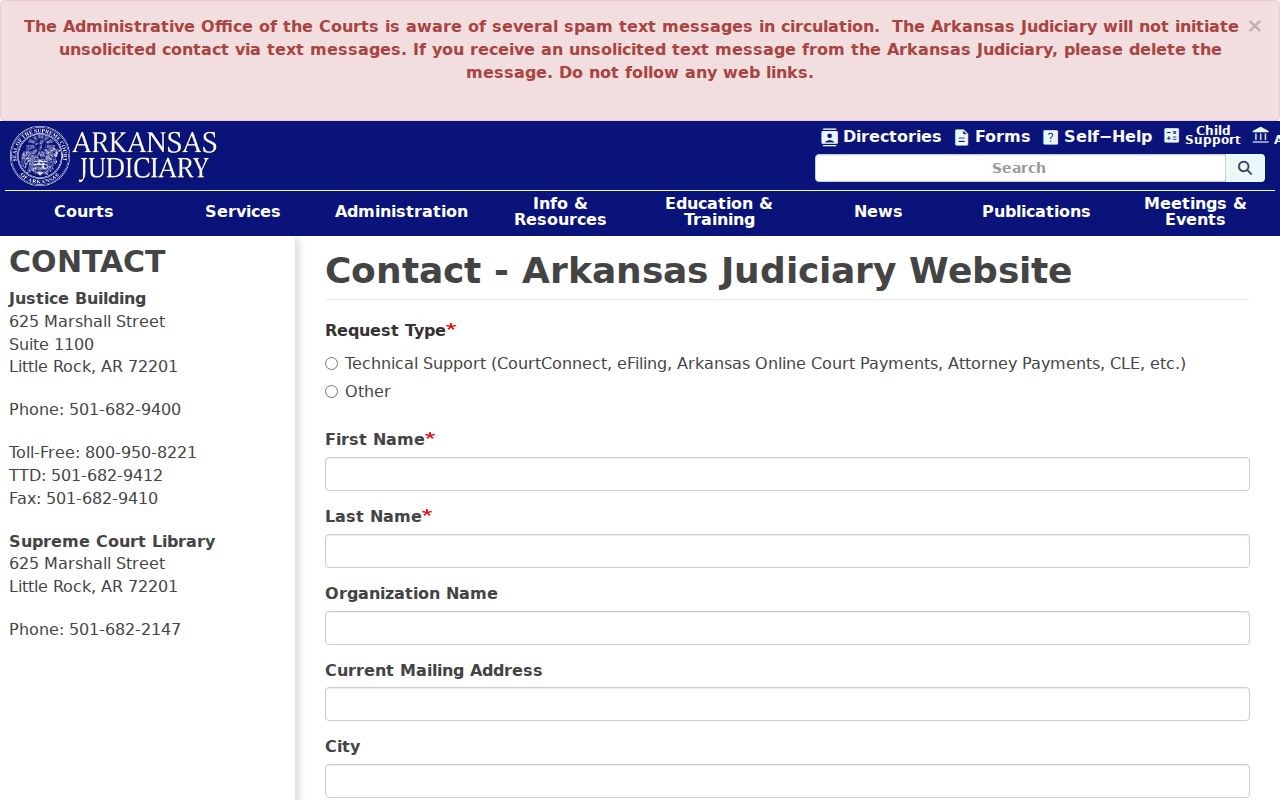
Use that form only for portal trouble, since decisions about copying a specific case record still rest with the court clerk.
St. Francis Court Records Data Requests
Need one judgment from St. Francis County? Go straight to the clerk. A single case request never counts as a compiled-data request. None of the bulk paperwork applies.
The AOC office that handles statistics (ORJS) runs a different track entirely. Its forms and agreements govern bulk or compiled court information. That is the kind that spans many records rather than one file. Some categories even require an affidavit or a performance bond before release.
The line is simple. A case-specific request names the case and the document you want. A compiled request describes a dataset pulled across court records. It must satisfy Administrative Order 19. Knowing which one you are making saves real time at the counter.
Certified Copies and Fees
A plain copy just reproduces the record. A certified copy carries the clerk's authentication, which is what an agency, another court, or a formal process will demand as proof of the filing. St. Francis County publishes no complete local fee sheet, so don't assume or mail a fee copied from another Arkansas county. Certification costs what the local clerk says it costs.
| Item | Published Amount |
|---|---|
| Search ARCourts case information | $0 |
| Counter inspection | Confirm current policy with clerk |
| Plain paper copy | Confirm current fee with clerk |
| Certified or authenticated copy | Request an exact clerk quote |
| Transcript | Reporter estimate and delivery terms |
Call before you mail anything. Ask whether charges run per page or per document, how certification is priced, what payment the office accepts, and whether a self-addressed stamped envelope is required. Getting those answers first keeps your request from stalling over an incorrect payment.
Older St. Francis Court Records
Older St. Francis County court records live in a different world from today's participant search. The paper era relied on clerk indexes, docket books, archived files, and microfilm, and much of that material is still what the clerk works from.
Help them narrow it down. Give an approximate year, the full caption, the likely court, and the case type. That tight request gives the clerk better starting points. A bare name does far less.
For records spanning the state, the Arkansas Judiciary publishes statewide court data resources through its ORJS data page. That page lists what is available and how to request it.
Compiled statistics and one archived St. Francis County case file are still two different requests. For the file itself, go to the local custodian. When a record predates reliable electronic coverage, ask whether staff can search a paper or microfilm index and whether retrieval adds time or a quoted search charge. Keep this in mind. A record missing online is not proof the older case never existed at all.
Public Access and Sealed Records
Arkansas Supreme Court Administrative Order 19 governs access to court records. It draws a line between courthouse access and remote electronic access. Under Administrative Order 19.1, protected confidential data must be stripped from the public version of a filing. An unredacted version may be filed under seal. Added limits apply to juvenile, adoption, sealed criminal, and protected family material. If you claim party-authorized access, ask the clerk up front. Ask what identification or authorization to bring.
Key Rules:
Administrative Order 19 sets the Arkansas court-record access framework.
Administrative Order 19.1 governs redacted public copies and protected unredacted filings.
Arkansas Code § 9-27-309 restricts juvenile-record access.
Arkansas FOIA, § 25-19-101 et seq. governs many local records but does not override court rules or sealing orders.
A missing search result can mean many things. Narrow criteria, an older file, a different court level, restricted access, or outright sealing could all be the cause. Recheck the spelling, date range, and court before concluding anything, because sealing is a legal status no public user can filter away.
Specify St. Francis Court Records
Name what you want. A precise request helps. Identify the exact judgment, order, pleading, or docket sheet, and include the case number, caption, filing or event date, and copy type. Exhibits raise their own questions about custody and any access order. Transcripts go to the official court reporter, not the clerk.
Federal cases arising in St. Francis County don't sit in the county court record system. They belong to the U.S. District Court. That is the Eastern District of Arkansas, reached through its PACER portal. The court system, not county geography, decides where a record lives. For state Circuit and District Court material, the right chain stays the same. Search ARCourts first. Then go to the proper St. Francis County clerk. Verify the current fee with the custodian. Ask about document availability too before sending any St. Francis County court-record payment.